
Accurate address information is absolutely essential for the success of any fiber-to-the-home (FTTH) project. From the very beginning of planning to the final installation at a customer’s home, address data acts as the central nervous system—connecting every phase of the project.
When address data is wrong, the impacts can ripple through the entire build: project delays, inflated costs, missed service opportunities, and frustrated customers.
1. The Role of Address Information in Network Design
The entire network design hinges on accurate address data. It starts with mapping the service area and performing demand analysis. Without a reliable list of potential customer locations, it’s nearly impossible to create a realistic business plan or secure funding.
Engineers use GIS (Geographic Information System) tools to plot every potential subscriber on a map. This data drives the physical network design—determining where main fiber lines will run, the placement of splitters and cabinets, and the length of individual “drops” to each home.
If addresses are wrong, the design may bypass interested homes or waste resources building to locations that don’t exist. The result? Stranded assets, costly redesigns, and project delays.
2. The Impact on Permitting and Construction
Permitting is one of the biggest hurdles in any FTTH build—and accurate address data is essential. Local municipalities, state transportation departments, and utility companies rely on precise addresses to issue construction permits.
If address information doesn’t align with official records, permits can be denied, forcing construction to stop while the paperwork is corrected. Every delay adds time and cost to the project.
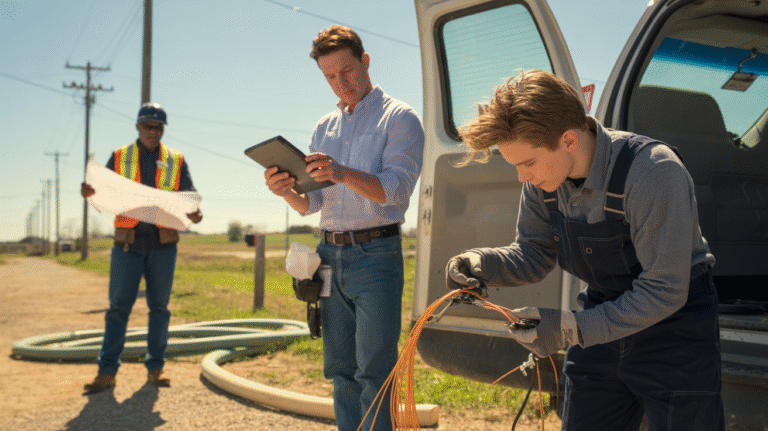
During construction, field crews depend on address data to locate where to place pedestals, splice points, and other equipment. Errors at this stage can lead to misplaced assets or missed homes—both expensive to fix.
3. The Link to Customer Management and Billing
Accurate address information doesn’t just matter in design and construction—it’s key to delivering a great customer experience.
From the moment a customer signs up, the address guides every step: scheduling, dispatching technicians, and ensuring the right equipment is installed at the right home. A simple address error can result in a technician showing up at the wrong location—creating a bad first impression.
Once service is live, the address becomes the foundation for billing and support. It ensures customers are billed correctly, service calls are routed properly, and network issues can be quickly resolved. Clean address data helps prevent billing errors and improves customer retention.
Conclusion
From planning to activation, address information is the single most important dataset in an FTTH project. Getting it right up front saves time, money, and headaches—and ensures your network reaches every home that wants service.
At CHR Solutions, we help broadband providers build smarter—from design to deployment. Contact us to learn how we can help your team leverage accurate data to deliver more reliable networks.